Joints
Joints
Bench slave 
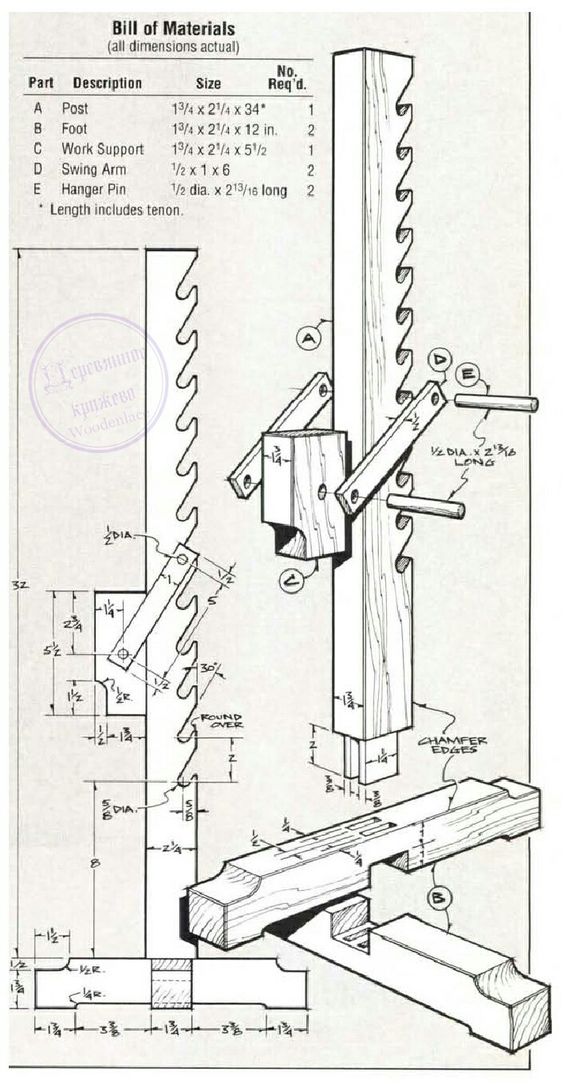
A bench slave wood joint is a type of wedge tenon joinery used to connect the legs to the front rail of a wood bench.
- The bench slave wood joint uses a wedge-shaped tenon that fits into a corresponding mortise cut into the end of the front rail.
- The open-wedged mortise allows the tenon to be inserted from the side rather than the end of the rail, making assembly easier.
- The tenon on the leg tapers inward, forming a wedge shape. As it's inserted, it spreads the sides of the mortise open for a secure friction fit.
Uses:
- Bench slave joints are commonly used to connect the front legs of wood benches, where they provide strong joined connections without needing clamps.
- The wedge fit makes the joint self-tightening as weight is placed on the bench, increasing its integrity and load-bearing capacity over time.
- It allows the front rail to extend past the legs for aesthetic reasons while still providing a hidden joint that doesn't require face-joint fasteners.
- By inserting from the side, it makes bench assembly and disassembly easier compared to joining tenons inserted from the end of the rail.
In summary, the bench slave joint uses a wedged tenon to securely connect bench legs to the front rail in an assembly-friendly way, providing durability suitable for heavy-duty wooden furniture. The self-tightening wedge fit makes it a strong and lasting joinery method.