Joints
Joints
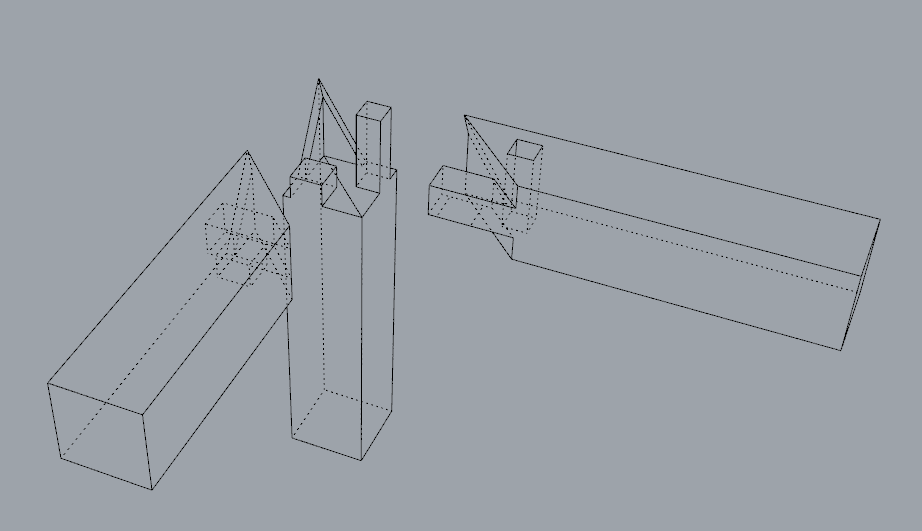
Three-way miter joint 
Three-way miter joint woodworking technique:
- This joint connects three pieces of wood that meet at a single point, forming three branches from a central intersection.
- The ends of each wood piece are cut at a corresponding angled miter, typically 30 or 45 degrees. This prepares three points to join together.
- At the mitered surfaces where the three pieces will connect, interlocking spline or tab shapes are cut precisely along the wood grain direction.
- The splines or tabs are cut and shaped on each piece so that when assembled, they will engage with each other securely.
- When fitted together, the interlocking grain-matched splines reinforce the three-way miter junction.
- Traditional applications include structural wood connections, furniture joinery, and other projects requiring strength at a three-branch intersection.
- Even without glue, this joint transfers forces well in any direction through the strength of the engaged wooden fibers.
The three-way miter joint showcases advanced Japanese woodworking skills to robustly and invisibly unite three angled wood pieces at a central strongpoint. The technique remains useful for quality woodcraft today.