Joints
Joints
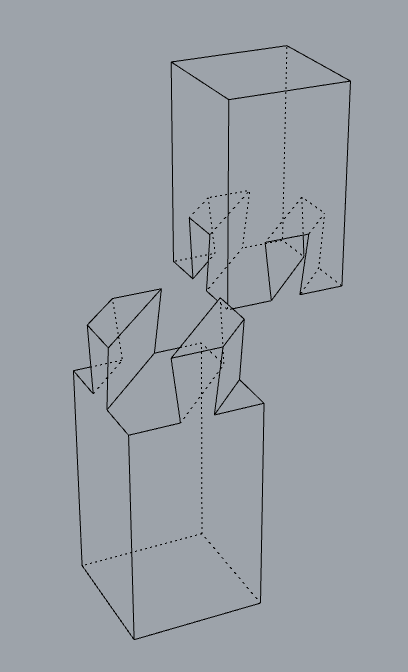
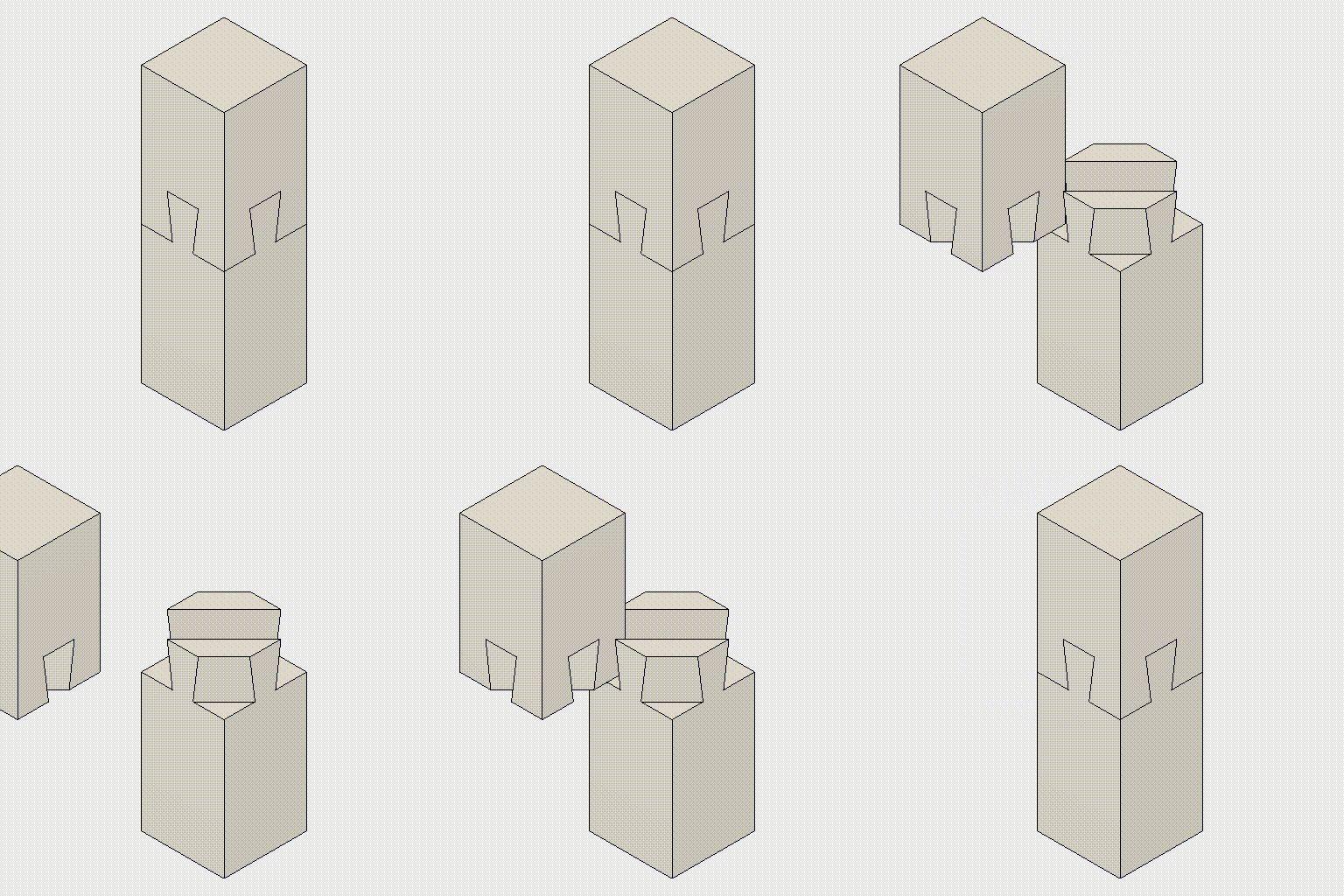
Shihou-ari-tsugi 
Shihou-ari-tsugi wooden joinery technique:
- Shihou means "four directions" or quadrants
- Ari means "existing" or being placed
- Tsugi refers to the joining method
To form this joint:
- The ends of two wooden pieces meeting at 90 degrees are prepared, usually with miter cuts.
- Intricate interlocking wedge or spline shapes are cut into each piece, following the grain in four symmetrical sections.
- This divides each end into four matchings "quadrants".
- When joined, the corresponding quadrant shapes in each piece fit together securely.
Traditionally used in Japanese carpentry, this joint transfers load stresses evenly in any direction by engaging all four-grain quadrants.
Even without glue or fasteners, the synchronized interlocking sections strongly bind the pieces at the corner intersection.
The shihou-ari-tsugi demonstrates the exceptional mastery of traditional Japanese woodwork craft and leveraging wood's natural structural properties for joinery. It remains applicable for demanding architectural woodwork today.