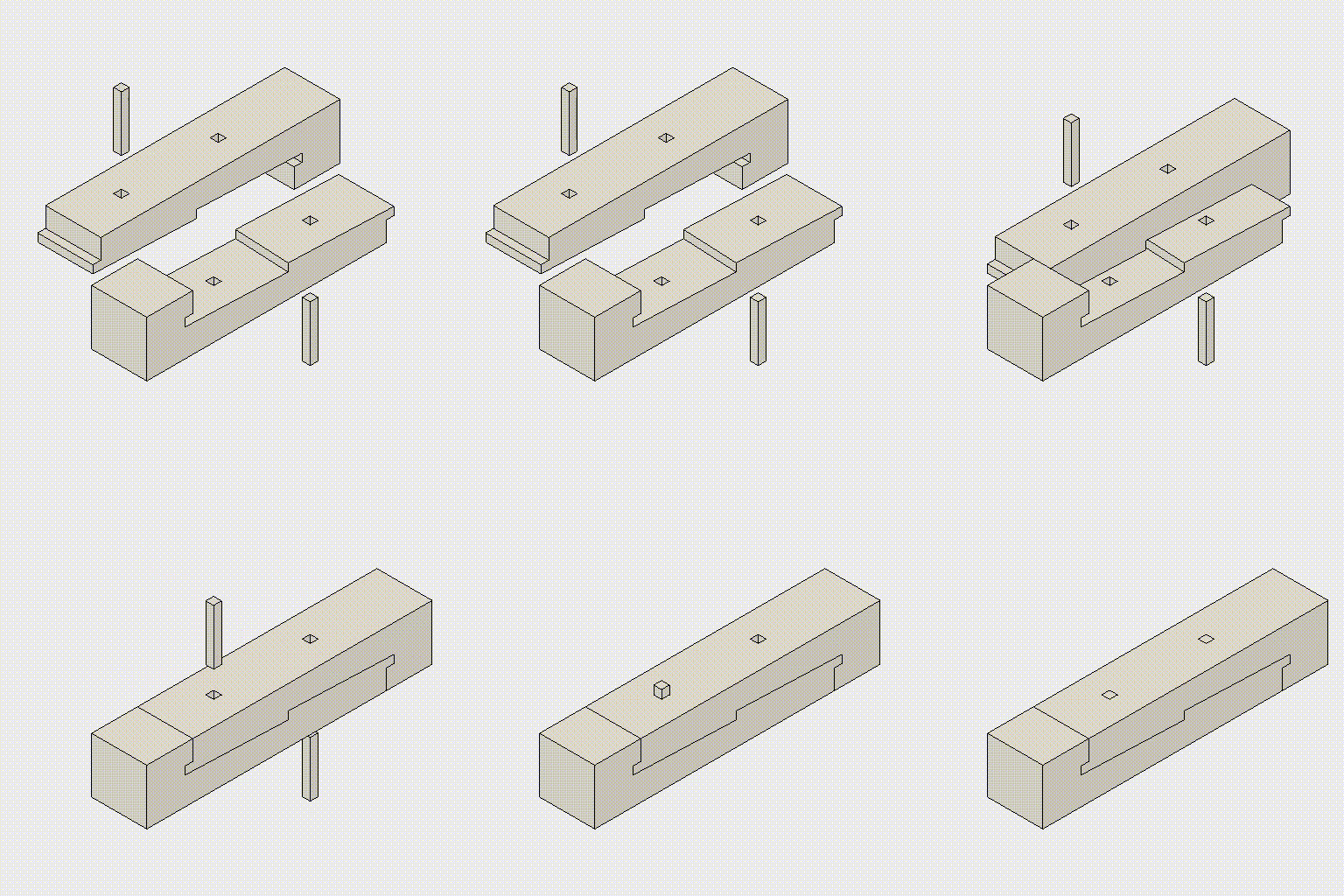
Joints
Joints
Okkake-daisen-tsugi 
The Okkake-daisen-tsugi is a traditional Japanese wood joining method used to securely connect structural members at right angles.
Broken down, the name means:
- Okkake refers to interlocking tabs or projections cut into the wood.
- Dai means "large" or "main". Sen means "line".
- Tsugi indicates the pieces are joined together.
To form this joint, the ends of the two boards meeting at 90 degrees are first cut in a miter fashion.
Then large triangular interlocking tabs are cut prominently into the facing edges of each board, following the direction of the wood grain.
These protruding triangular tabs fit closely together when the mitered ends are joined, with the wooden fibers reinforcing the connection.
Used commonly in timber frame architecture, it produces a strong corner joint engaged by the triangular wood fittings. Even without glue or nails, it withstands tension and torque loads.
This traditional joinery technique remains useful today for applications requiring robust but separable right-angle timber connections.