Joints
Joints
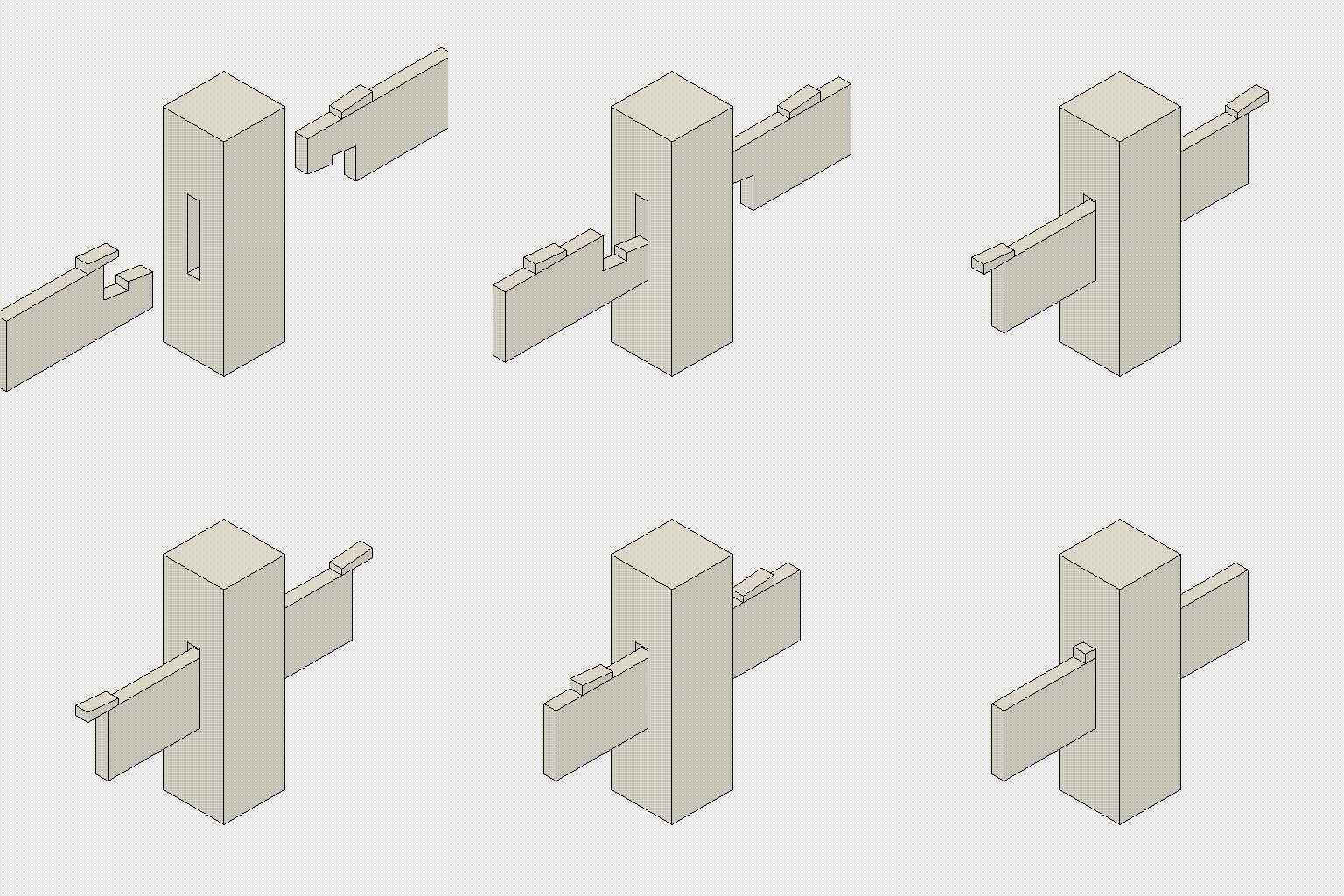
Nimai-kama-tsugi 
The Nimai-kama-tsugi is a traditional Japanese joining technique used to securely connect two structural wood members at an angled intersection.
The key details:
- Nimai means "two pieces" of wood.
- Kama refers to a "trough" or inward curved shaped cut made along the wood grain.
- Tsugi means the pieces are joined together.
To form this joint, the ends of the two wood pieces are first cut at a matching angle, usually 45 degrees.
Then, curved cuts resembling the shape of a trough or half-pipes are made in each piece, following the wood grain direction.
This forms two interlocking channels that allow the angled ends to fit snugly together when joined.
The curved channels tracing the grain strengthen the bond without nails or glue.
Commonly used in timber framing and furniture joinery, it produces a durable angled join that can later be taken apart if needed. Even today this strong yet removable joint technique remains useful for woodworking projects.