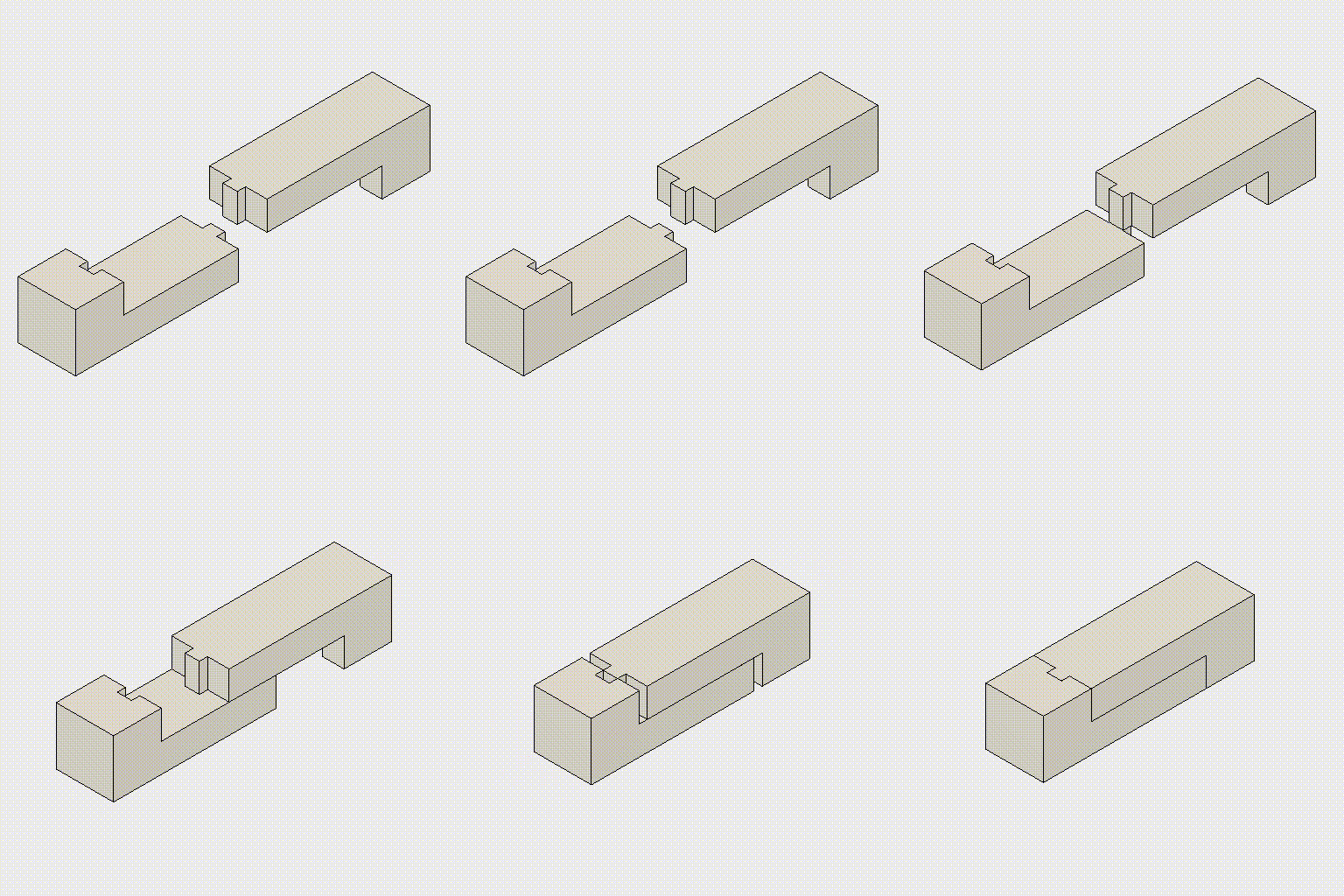
Joints
Joints
Meji-tsukikake-awase-tsugi 
The Meji-tsukikake-awase-tsugi is a traditional Japanese wood joint technique used to connect structural members at angled intersections.
The name breaks down as:
- Meji refers to the connection of three pieces of wood meeting at a point.
- Tsuki means to insert or insert into. Kake means the insertion of a wedge-like shape.
- Awase means to combine or fit pieces together.
To form this joint, three pieces of wood are cut to intersect at a single point, usually in an angular, triangular configuration.
Wedge-shaped tabs are cut into the angled edges of at least two of the pieces, following the wood grain direction.
These wedges are inserted into the receiving edges to securely fit and combine the three components at the point.
The interlocking wedge tabs reinforce the junction where the three pieces meet.
Traditionally used in wooden structural joints, it produces a strong connection without other fasteners. Even today this joint technique remains useful for woodworking applications requiring a secure three-way intersection.