Joints
Joints
Komisen-inro-tsug 
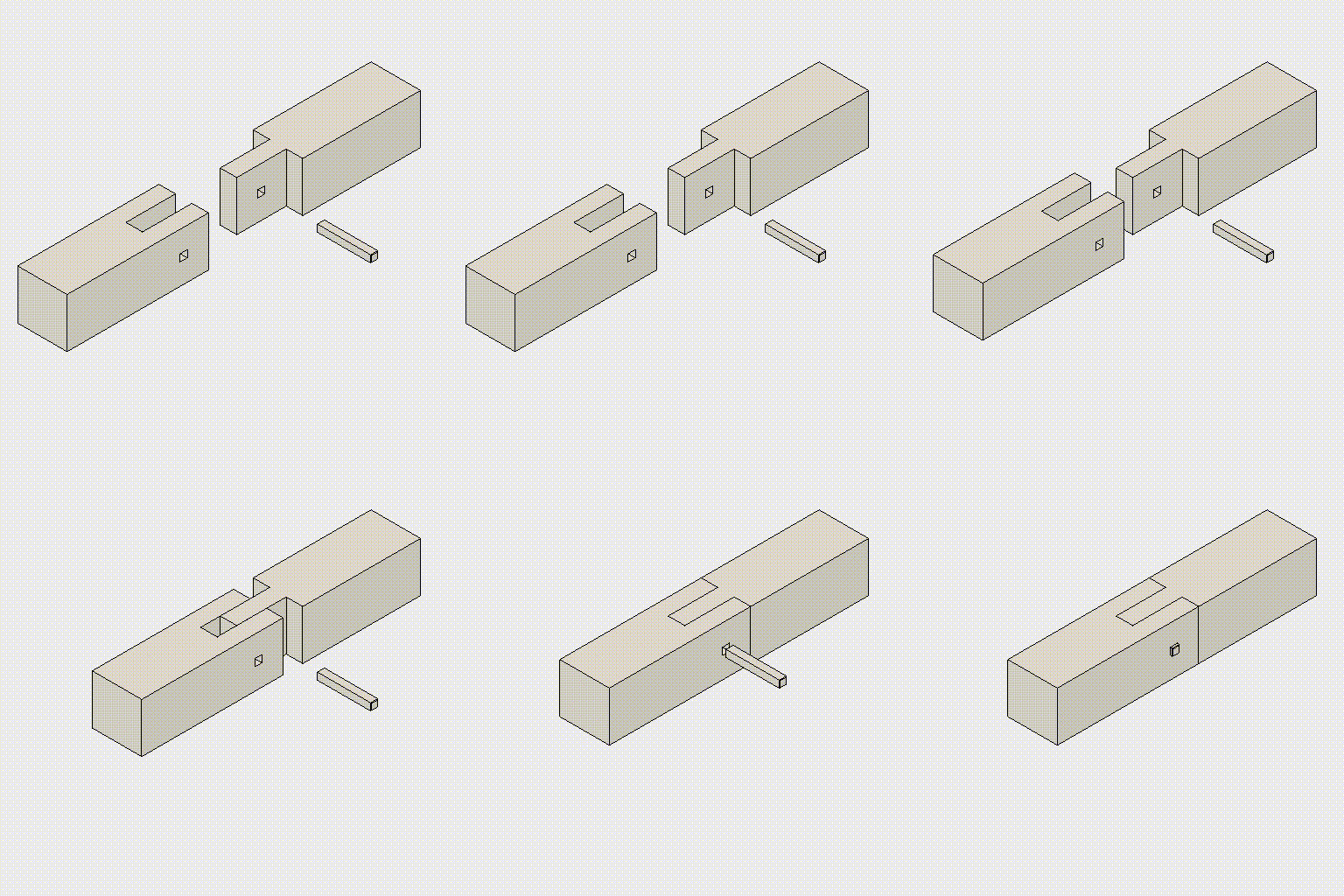
The Komisen-inro-tsugi is a traditional Japanese woodworking joint used to connect structural members at 90 degree angles.
In English it can be called a lapped mitre corner joint.
To form it, the ends of the two pieces are first cut at a 45 degree mitre as with a standard mitred joint.
However, instead of having the mitres directly abut, short tapers following the wood grain (komisen in Japanese) are made on both pieces.
These tapers lap over each other to interlock securely. One piece laps in (inro in Japanese) slightly further than the other to strengthen the joint connection.
The lapped mitres provide a strong and durable corner joint without using nails or adhesive. The lapping grain tapers reinforce the joint by engaging the natural strength of the wood fibres.
This traditional joint technique was commonly used in timber frame construction and wooden architecture, where robust angled connections were needed.
Today it remains useful for wooden joints requiring strength and disassemblability, such as in woodworking, furniture and carpentry projects.