 Joints
Joints
kanawa-tsugi 
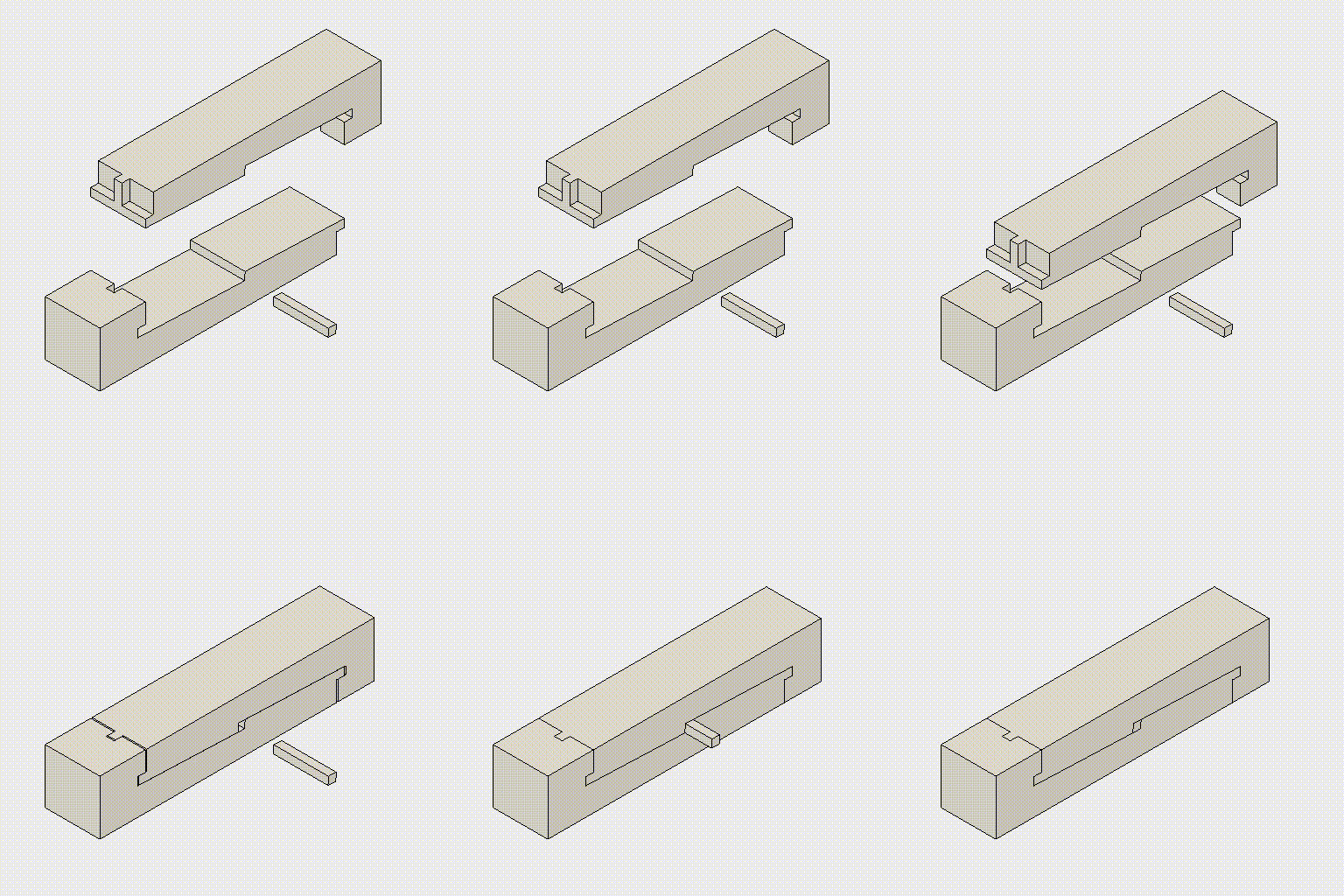
The kanawa-tsugi is a type of traditional Japanese wood joining technique used to make durable corner and angled connections without nails or adhesives. With this joint, intersecting structural members are miter cut as with a standard western miter joint. However, instead of having the mitered ends abut directly, one piece laps slightly over the edge of the other, creating interlocking tabs. This overlapping lap, referred to as "kanawa" in Japanese, reinforces the joint connection through snug interlocking of the pieces. When accurately cut and assembled, the joint sits flush while distributing stresses evenly. Known as "tsugi," or joining, it allowed for strong yet detachable corners in traditional timber-framed buildings. The lapped miter design enabled disassembly if needed for transport or repairs. This defining woodworking technique remains useful today for crafts and furnishings requiring robust angled joints that can withstand hardship yet be taken apart if necessary.