Joints
Joints
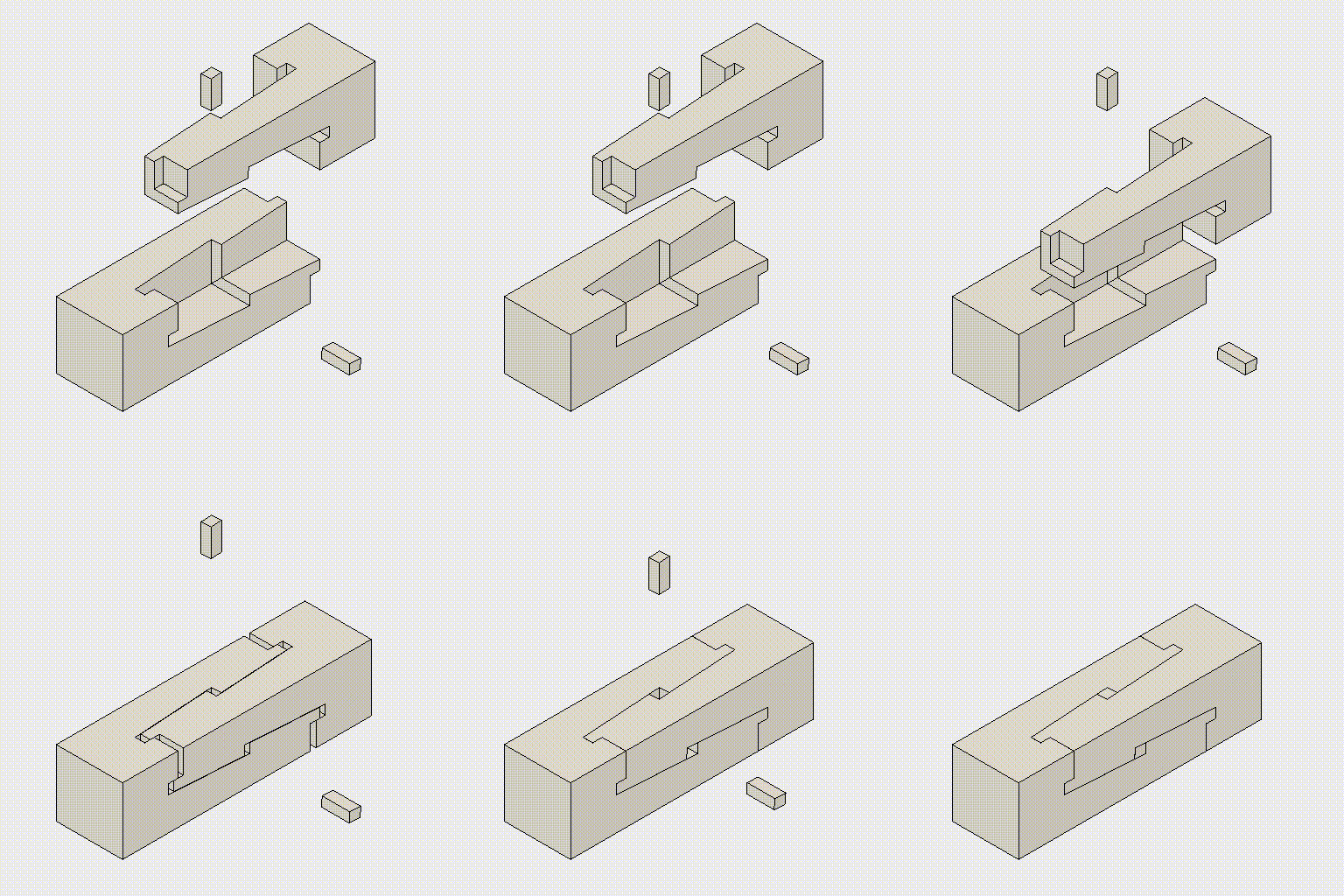
Kakeawase-komisen-tsugi 
Kakeawase-komisen-tsugi is the Japanese name for a specific type of wood joinery technique. In English, it is commonly called a butt miter joint.
A butt miter joint is used to join two pieces of wood or material at an angled intersection, such as when two frames meet at a corner. It involves cutting each piece at a 45-degree angle (a miter cut) so that their end grains meet cleanly in a continuous straight or angled line.
To form the joint, the mitered ends are abutted directly against each other without overlap. They can then be joined together in several ways - often by clamping the pieces tightly and either inserting nails, splines, or dowels parallel to the joint line for reinforcement. On furniture or finished woodwork, glue is also often applied to the joint for a strong permanent bond.
Butt miter joints are most commonly found at the corners of picture frames, window moldings, chair rails, shadow boxes, and other objects where two pieces meet at an angle. It produces a very clean-looking corner that appears seamless and maintains a consistent width of material.
The joint gets its name from the Japanese "kakeawase" meaning combination, referring to combining the angled ends. "Komisen" describes the cut shape which resembles strands or fibers. And "tsugi" means consecutive, referring to the consecutive joining of the mitered pieces. So in short, Kakeawase-komisen-tsugi translates to the angled butt joint where mitered ends are directly abutted.