Joints
Joints
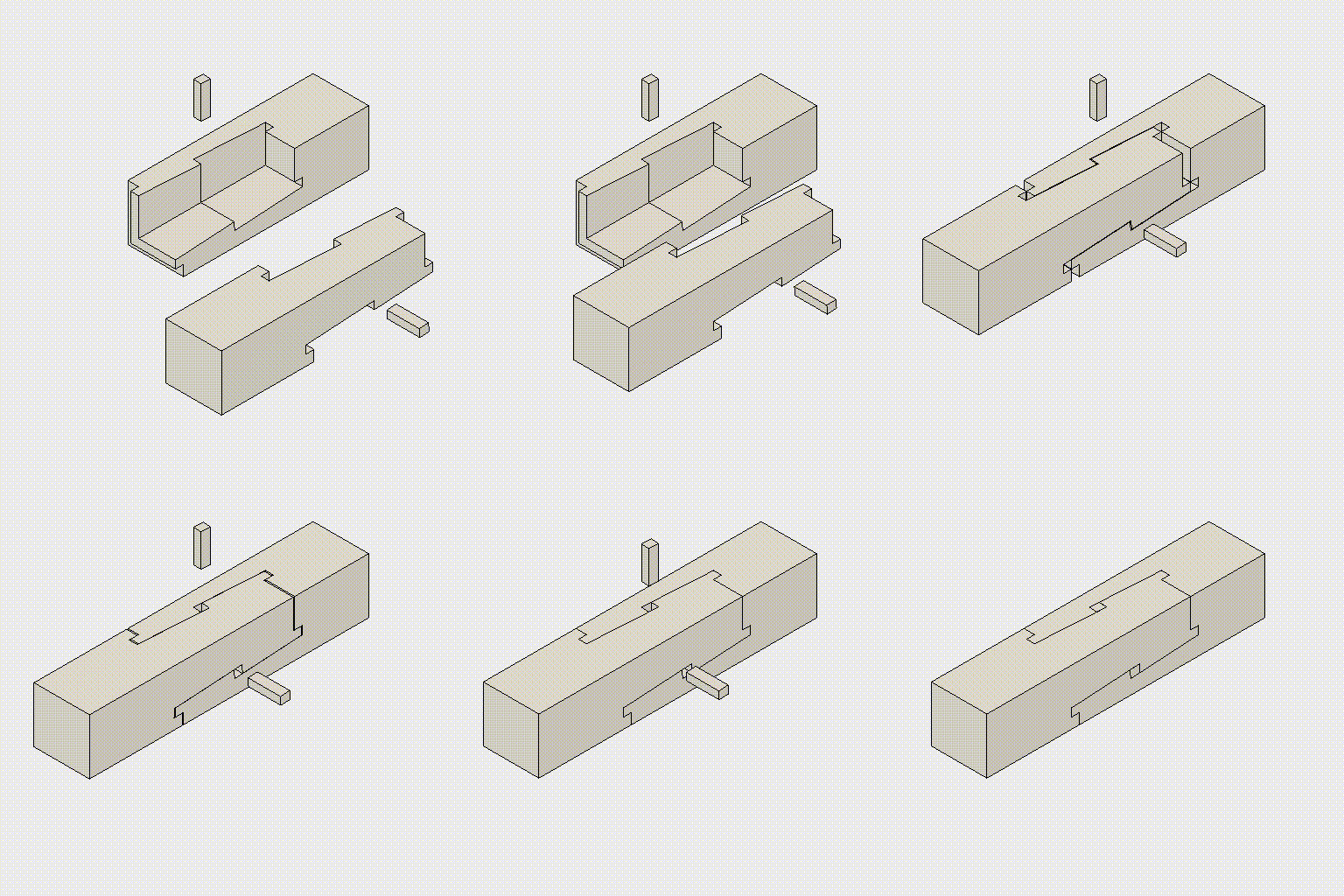
Hako-sen-tsugi 
Hako-sen-tsugi joints, also known as box joints, are a fundamental wood joining technique used traditionally in Japanese carpentry. To create a Hako-sen-tsugi or box joint, the end of one wood piece is cut into a series of adjacent, rectangular “fingers,” while the corresponding end of the mating piece has complementary sets of “notches.” The fingers and notches are precisely cut with hand tools into a grid-like interlocking pattern. Box joints derive much of their strength from preventing wood movement across the grain as the wood seasons. With their squares and 90 degree angles, box joints also add stability to resist forces perpendicular to the grain. The complex, meticulously fitted joints allow wooden structural elements and frames to be securely connected without other fasteners. Their use demonstrates the hallmark fine woodworking skills that have been honed through generations of Japanese carpentry traditions. Hako-sen-tsugi joints represent a refined wood joinery technique that helps create strong, enduring wooden structures in traditional Japanese architecture.