 Joints
Joints
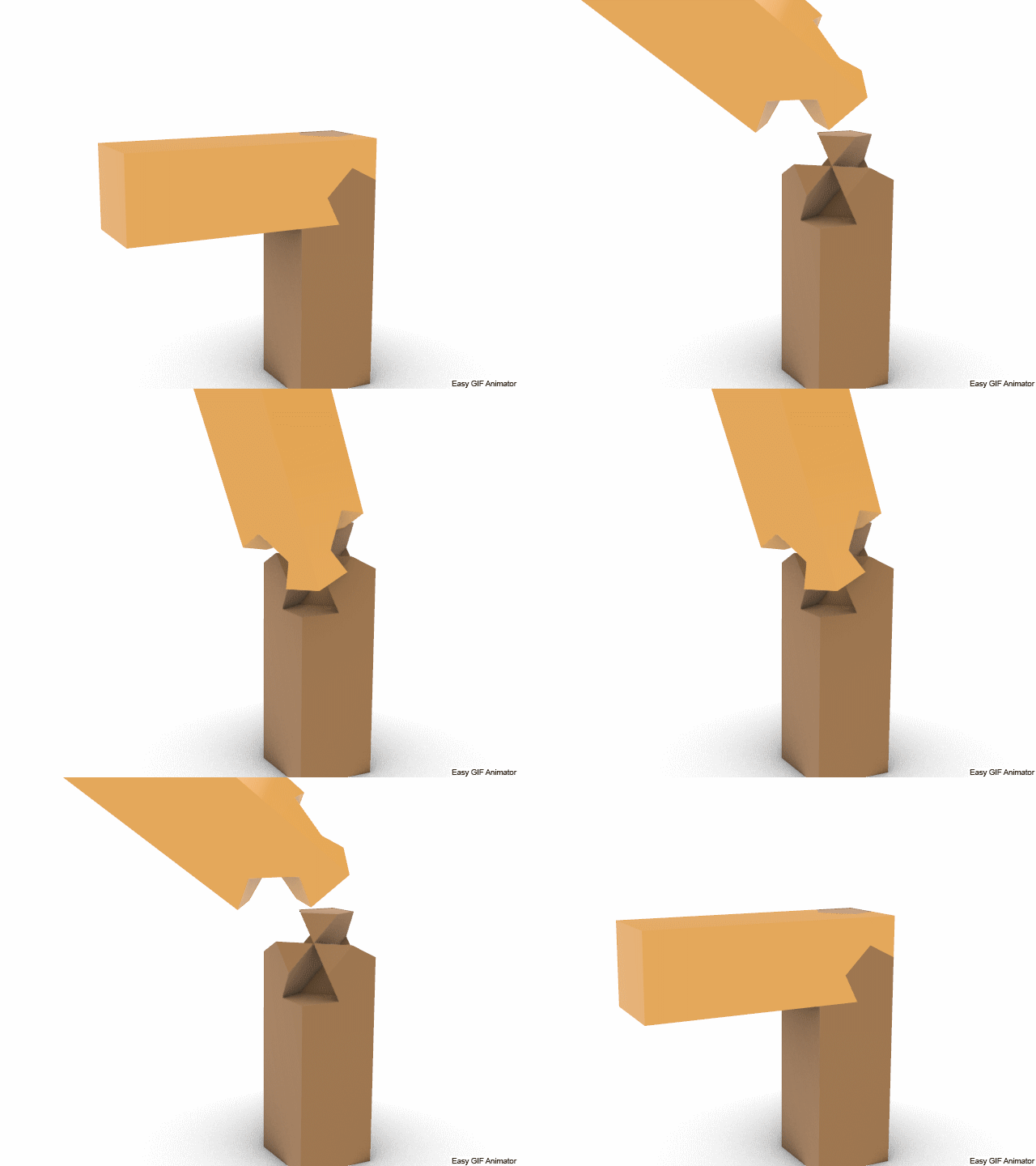
Kawai-tsugite 
The Kawai-tsugite is another traditional Japanese wood joinery technique. To make this joint, angled V-shaped cuts are made on the end grain of two wood pieces so they interlock like a dovetail. However, unlike a typical dovetail where the cuts are angled in the same direction, for the Kawai-tsugite one piece has inward-angled cuts while the other has outward-angled cuts. This creates a complementary wedge-shaped interlock.
The grain direction of the two timbers is oriented perpendicularly in the Kawai-tsugite. The crossing grain structure results in strong adhesion power even without glue. It saw widespread use in Japanese architecture to join structural elements like columns, beams, and transverse floors. The precision-fitting wedge formation distributed stress evenly, making the Kawai-tsugite suitable for enduring heavy loading and seismic forces over extended periods. Its visual appeal also reflected the mastery of traditional wood joinery techniques.
Here are some links on details
https://www.instructables.com/Kawai-Tsugite-Amazing-Three-way-Japanese-Joint/
https://www.ethan-brammeier.com/kawai-tsugite-joint